
TCS Series
Closed-loop current transducers engineered for railway traction and high-power conversion.
TCS is a compensated, current-output current-transducer platform developed for demanding railway environments. It is designed for accurate AC and DC current measurement, fast dynamic response, strong galvanic isolation and robust integration into traction converters, auxiliary converters, substations and other high-power systems.
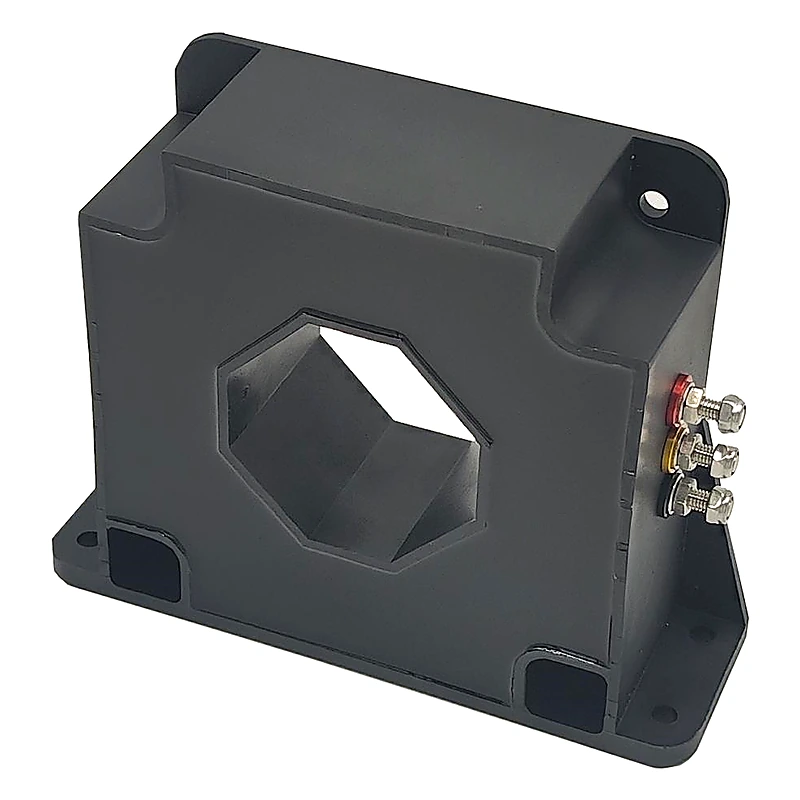
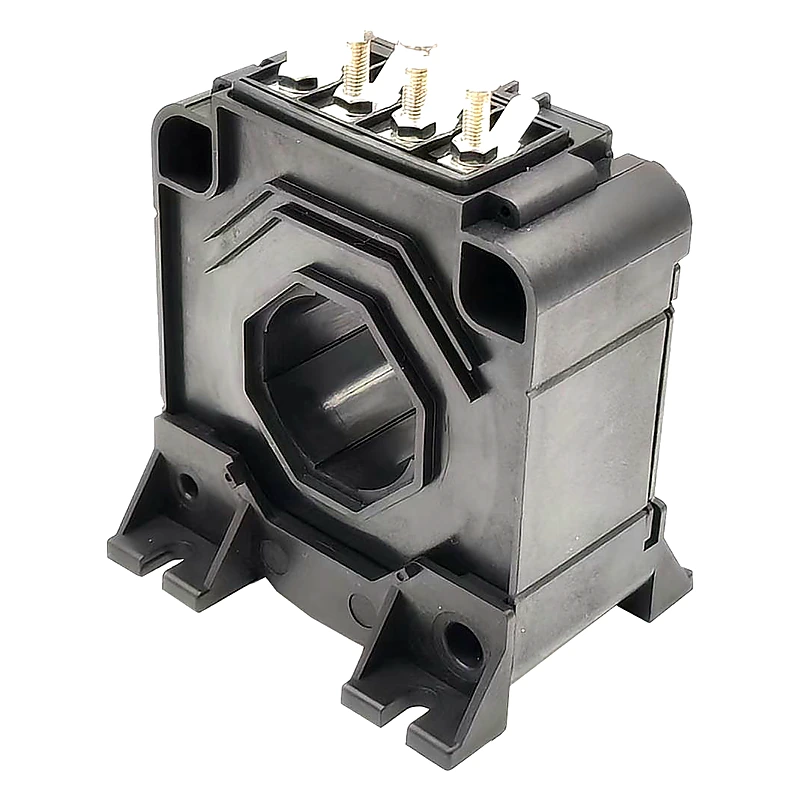
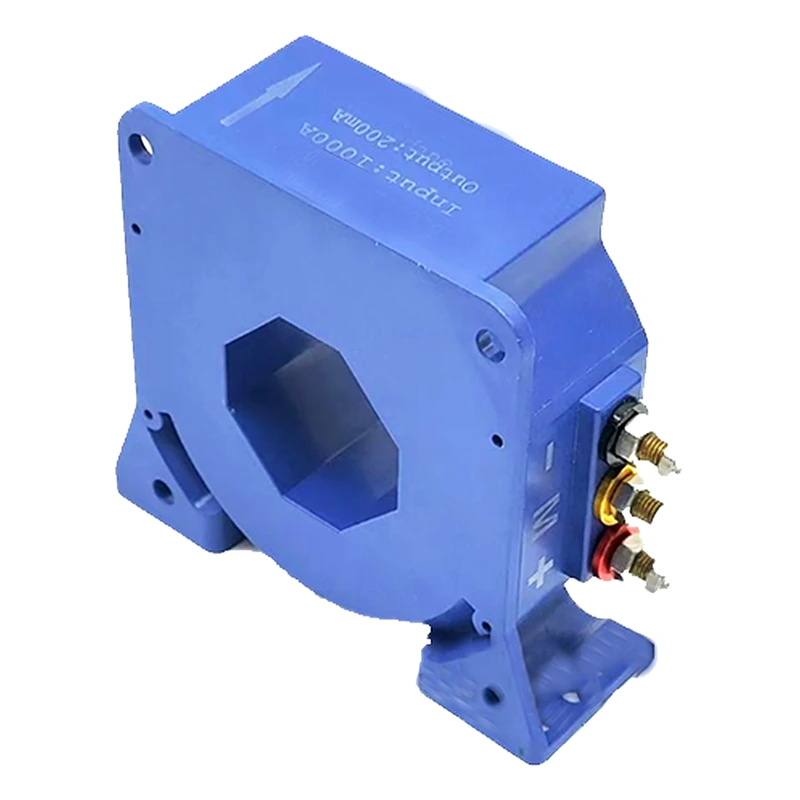
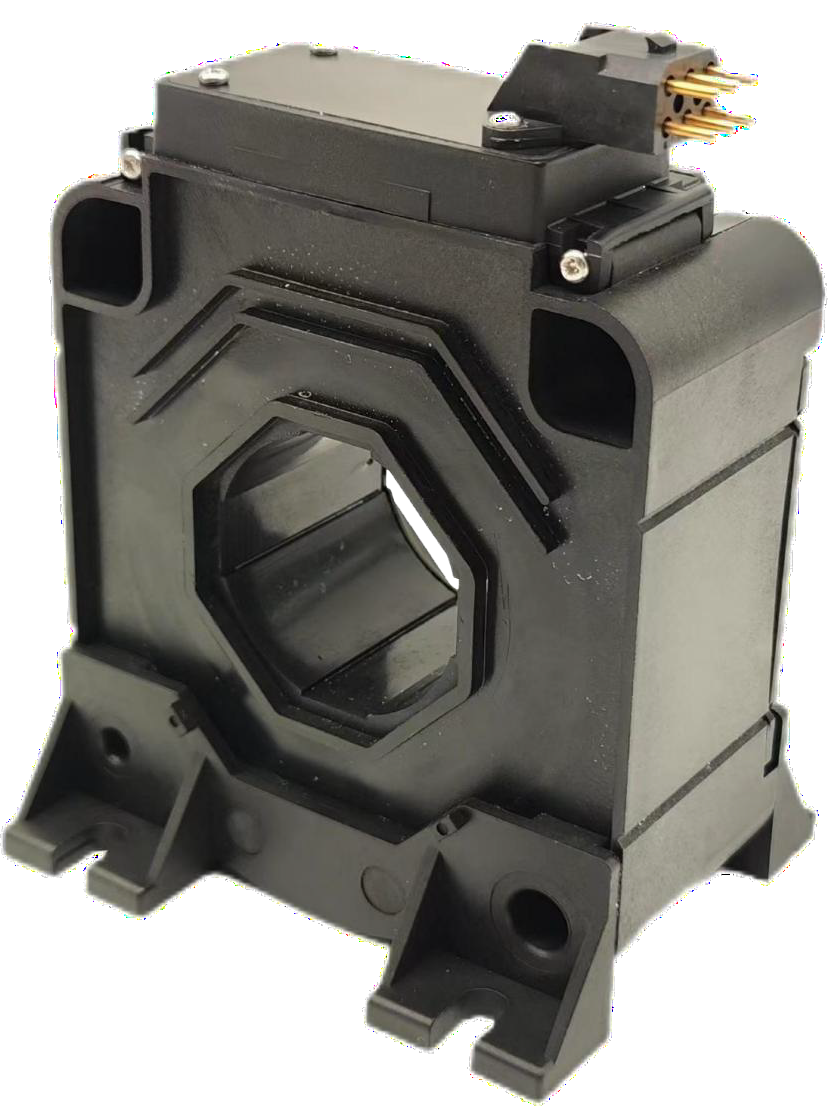
Designed around railway traction requirements
TCS is positioned as a strategic ADISENS current-sensing platform for rolling stock and railway power-conversion systems, with emphasis on accuracy, fast response, environmental robustness and electrical isolation.
Build a reference from your application requirements
Select the main electrical and connection parameters. The configurator identifies whether the combination matches a validated standard reference or requires ADISENS engineering review.
1000 A · 1/5000 · 4 threaded studs · Traction converter
How to read a TCS reference
The nomenclature combines the product family, nominal primary current, turns ratio code and secondary connection.
Codes for cable, multipole and customer-specified connectors are engineering-selection options and remain subject to feasibility review before release as a standard ordering reference.
Representative TCS datasheets
Only validated configurations are published as downloadable datasheets. Additional combinations are handled through engineering review.
| Reference | Nominal | Measuring range | Turns ratio | Connection | Accuracy | Bandwidth | Isolation | Datasheet |
|---|---|---|---|---|---|---|---|---|
| TCS400-5S4 PDF ↗ | 400 A | ±1000 A | 1/5000 | S4 | < ±0.4% | 100 kHz | 13.4 kV | Open PDF ↗ |
| TCS1000-5S4 PDF ↗ | 1000 A | ±2400 A | 1/5000 | S4 | < ±0.4% | 100 kHz | 13.4 kV | Open PDF ↗ |
| TCS1000-4S4 PDF ↗ | 1000 A | ±3000 A | 1/4000 | S4 | < ±0.4% | 100 kHz | 13.4 kV | Open PDF ↗ |
| TCS2000-4S3 PDF ↗ | 2000 A | ±3800 A | 1/4000 | S3 | < ±0.3% | 200 kHz | 6.0 kV | Open PDF ↗ |
| TCS2000-5S3 PDF ↗ | 2000 A | ±3500 A | 1/5000 | S3 | < ±0.3% | 200 kHz | 6.0 kV | Open PDF ↗ |
Standards are a core part of the TCS value proposition
The validated TCS documentation references the following railway and electrical-safety standards. Exact applicability remains configuration- and end-application-dependent.
Where TCS fits in the railway power architecture
Need help defining the right TCS?
Share the traction architecture, nominal current, peak current, turns ratio, secondary connection and railway qualification requirements.
Request Technical Support →Need another connector, ratio or mechanical configuration?
ADISENS can study project-specific TCS configurations. Engineering feasibility review is required before release of non-standard combinations.
Request a Custom TCS →